
COMMUNICATION AND BRANDING: THE KEYS TO SUCCESS FOR FINE FOOD SHOPS

The storefront: the primary vehicle for identity
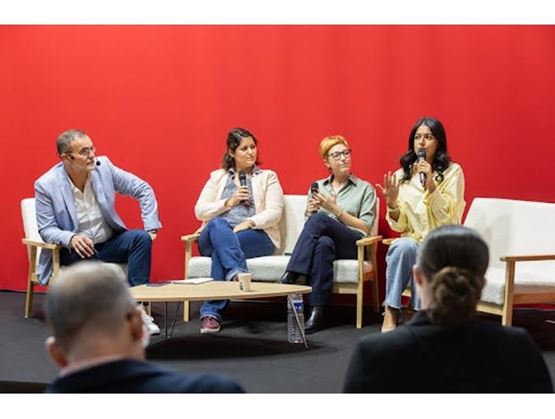
This first impression plays a decisive role in the decision whether to enter. Audrey Lorel asks the question bluntly: ’What's the point of offering the best products if no one steps through your store’s door? ‘A delicatessen is more than just a place to shop, it is a place of pleasure, sharing and exchange." This must be felt from the outside, thanks to a clear window display, carefully crafted scenography and clear messages that convey the shop's positioning. Before even thinking about graphic identity, Léa Karsenty insists on the need to clarify the strategic foundation.
‘Before thinking about logos or typography, you need to lay the foundations: positioning and promise. Who are you? Who are you reaching out to? And above all, what value do you add beyond the product itself?’ This reflection will determine the consistency of all communication, from the physical location to digital media.
Authenticity and professionalism: finding the right balance
When communicating about your products, the tone you adopt is key. For Marine Dion, ‘today, the type of position you can adopt in your communication strategy is no longer as rigid as it used to be.’ This balance depends on your target audience, their habits, but also your own personality. ‘It's easier to embody a brand by infusing it with a little of your own personality’ rather than forcing yourself to adopt an artificial persona.
Audrey Lorel points out that the two concepts are not mutually exclusive. ‘For me, authenticity and professionalism are not contradictory.’ Customers of fine food shops are looking for quality products, advice and sense. According to her, ‘the best way to combine authenticity and professionalism is to take a sincere interest in the products they have carefully sourced and to be able to talk about them well, sharing stories about people, products and expertise with passion.’ Sharing recipes or suggestions on how to use the product also contributes to this relationship of trust.
For Léa Karsenty, authenticity is a powerful lever, provided it is mastered. ‘Authenticity does not conflict with professionalism; it reinforces it.’ Showing behind-the-scenes or everyday life can be relevant ‘if it remains clear and aligned with the brand's identity.’ The goal is to stay authentic, avoid exaggeration, and ensure a consistent brand image.
Clarity and consistency in communication
Effective communication relies on the clarity of the message. Marine Dion regularly observes a ‘lack of consistency’ and ‘lack of clarity’ in the communication strategies of local businesses. Information overload, overly vague messages, and inconsistent media means that offers are often misunderstood, and brand image is weakened.
Audrey Lorel makes the same observation. ‘The main pitfalls we see are almost always related to legibility issues, both in terms of the content of the offer and its form, with poor prioritisation of information.’ Using multiple media, fonts and graphic styles undermines overall consistency. At a time where both physical and online consumer’s attention is so valuable, concentrating efforts into a well-defined communication direction, becomes a strategic necessity.
Léa Karsenty also warns about the content of the message. ‘Communication that is too marketing-oriented and sounds false’ or ‘pretty images without substance’ creates distance with the customer. To avoid this pitfall, she recommends reconnecting with the brand's actual day-to-day reality, ‘what really happens behind the counter, in the workshop, and with customers.” Authentic communication is above all embodied communication.
Consistent brand language across all your media
Whatever the platform, your brand must remain recognisable. Marine Dion recommends implementing a brand framework. ‘This document will become the backbone of the brand’ by allowing ‘the values, tone and language used to be written down in black and white’. Shared with everyone who works on behalf of the brand, it guarantees consistency, while leaving room for individual interpretation.
For Audrey Lorel, ‘there is no difference between platforms. Consistency is the critical in order to achieve a strong identity. She invites us to ask ourselves a fundamental question: ‘How do you want people to talk about you when you are not there?’ The answers should guide everything you say and do, both in-store and online.
Léa Karsenty refers to a ‘common thread’ that runs through all points of contact. ‘The idea is that the customer recognises the same “tone of voice” and the same intention, whether they are reading a label, a post or an email.’ This continuity reinforces brand recognition and credibility.
Communicate effectively, even with limited resources

Audrey Lorel points out that ‘Google listings are free and powerful tools for local businesses.’ She also emphasises the importance of word of mouth and the in-store customer experience which encourages online recommendations and reviews. This is essential in a sector where gift buying is prominent.
Finally, Léa Karsenty encourages businesses to make the most of what they already have. ‘Start by capitalising on what you already have: your product, your history, your vision.’ Publishing less but better quality, choosing a clear theme and ‘making your shop a media outlet’ are among the most effective levers. Even with limited resources, ‘the key remains the same: clarity, consistency and credibility’.
This round table discussion reminded us that successful communication does not depend on the number of platforms used, but instead on the authenticity of the message and the consistency of the image, from a first glance at the shop window to the words shared online.
Meet all the professionals in the fine food sector at the Gourmet Selection trade show from Sunday 7 to Monday 8 June 2026 at Paris Expo - Porte de Versailles Pavilion 7.2.
Image credit: Nathalie Savale
Glenn Carterns-Peters Unsplash