
MILLENNIALS: THE GENERATION THAT DECIDES ON HOUSEHOLD PURCHASES

An overview of Generation Y’s expectations and how high-quality food retailers can meet them.
Who are the millennials in 2026?
The definition most widely used by research organisations is that of the Pew Research Centre: Generation Y comprises people born between 1981 and 1996. In France, data from INSEE as at 1 January 2026 show 12.8 million people aged between 30 and 44, representing 18.5 per cent of the population. This age group is at a stage in life when major decisions are made: settling down, finding a home, and having children. According to the INSEE’s 2025 demographic report, the average age at childbirth is 31.2 years for women and 34.1 years for men. Today’s young parents are therefore, for the most part, millennials.
NielsenIQ describes this generation as being in charge of household purchases and a prime target for brands. As the first generation to have grown up with the internet, they have been using the web and mobile phones since their school days, spend more time online than watching television, and are more receptive to new communication tools, but also more difficult to please. For a high-quality grocer, they represent both everyday customers and those shopping for special occasions: the weekly shop, a present for grandparents, drinks with friends, or the children’s afternoon snack.
A tight budget that doesn’t rule out premium products
The BPCE L’Observatoire Digital & Payments Barometer, published in September 2025 based on payment data from the first half of the year, shows that the average food basket for 35–55-year-olds has fallen from 42 euros in 2021 to 38 euros, whilst their shopping frequency has risen by 4 per cent – a sign of a desire to avoid waste. Eats out are carefully planned, shopping trips optimised, and, according to the study, this is the generation that must strike the finest balance between frequent meals and social occasions. Among those under 35, the average basket value fell from 28 to 22 euros over the same period.
This tight control does not rule out enjoyment. According to the report Finding Harmony on the Shelves published by NielsenIQ in July 2025, 54 per cent of consumers worldwide say they are willing to treat themselves by buying a premium brand product, and millennials exceed this average at 61%, ahead of Generation Z (58%). The OpinionWay survey for Payplug and PrestaShop, conducted in January 2025 amongst 1,001 French consumers, adds that 61% of Millennials have already used instalment payments and that 34% prefer Black Friday to other promotional events. A millennial customer compares, plans and waits to be reassured about the price, but is happy to buy an exceptional product if they understand what they are paying for. Intermediate product sizes, affordably priced gift sets for the festive season and a clear calendar of offers meet this dual expectation.

Organic, local, transparency: the return of socially responsible products
Hybrid shopping journeys, from smartphone to shop
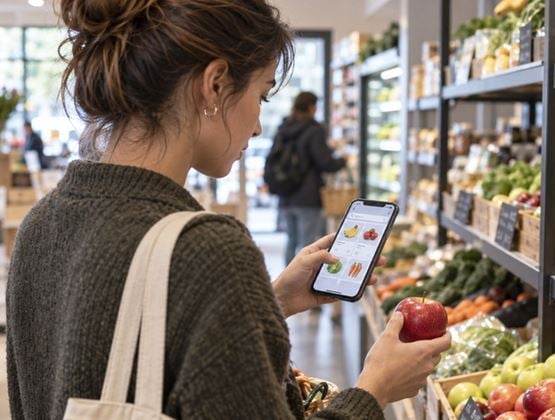
According to Médiamétrie’s ‘Internet Year 2025’ report, nearly 7 in 10 French people check their social media and messaging apps every day, and mobile devices account for 80% of time spent online. The 2026 Social Media Observatory from the same institute ranks cooking as the second most-followed content category, just behind humour, and notes that social media is becoming a genuine driver of purchases, including live shopping. An up-to-date Google listing with recent photos and reviews, an Instagram page showcasing your products as they are cooked rather than simply displayed, reliable information on what’s on the shelves, and in-store order collection all cater to this generation’s habits. Recipes have an audience: 80% of French people say they often cook at home to eat well, according to the OpinionWay survey for JOW carried out in March 2025.
What Generation Y expects once they’ve stepped through the door
Data from BPCE L’Observatoire shows that 35–55-year-olds are constantly balancing large gatherings with a desire for conviviality. Cocktail dinners, Sunday family meals and gifts for loved ones are all occasions where a quality grocery shop provides a ready-made solution for sharing. Putting together themed selections – such as an aperitif platter, a weekend breakfast or a baby gift – saves time for customers who are short of it, and tasting remains the surest way to turn a new discovery into a repeat purchase.
In-store mobile payments are favoured by over 60% of Generations Y and Z, according to Payplug and PrestaShop, and younger shoppers are keen to visit pop-up shops to handle the products and receive in-person advice. The survey by the Agence BIO confirms the growing trust placed in small retailers. A tasting session, a meeting with a producer or a food and drink pairing offered at the counter give this generation something they cannot find either online or in supermarkets.
Keeping track of consumer generations with Gourmet Selection
Following on from Generation Z, Generation Y is demonstrating the same demand for meaning, transparency and experience, whilst also bearing the responsibility for a whole household’s shopping. The studies and trends published by the trade fair and the article on 2026 trends in the fine food sector expand on this market analysis, whilst the Experts’ Agora brings these changes up for discussion with industry professionals. On the product front, the Best Of competition and L’Epicerie de Gourmet showcase the products and concepts that are already responding to these new consumer behaviours.
See you on 13 and 14 June 2027 at Paris Expo Porte de Versailles.